

Email is one of the most essential communication tools in the workplace and in academic settings. Whether you’re contacting a colleague, manager, professor, or client, your email should reflect professionalism, clarity, and respect. A well-written email helps you build credibility and ensures your message is understood quickly.
A strong email always begins with a clear and specific subject line. The subject line should immediately tell the reader what the message is about. Instead of writing something vague like “Hello” or “Question,” be precise. For example, “Meeting Request – Project Update” or “Follow-Up on Interview – March 10” makes it easier for the recipient to prioritize and respond efficiently.

Your greeting also matters. In professional communication, it is always appropriate to start with a polite opening such as “Dear,” “Hello,” or “Hi,” followed by the person’s name. “Dear” tends to be more formal, while “Hello” is neutral and widely acceptable in most business environments. Avoid starting the email without any greeting, as this can feel abrupt.
In the body of the email, get to the point early. State your purpose clearly in the first sentence. You can use phrases like “I am writing to confirm…,” “I’m emailing regarding…,” or “This email is to inform you that…”. Keep your message focused on one topic and include only the necessary details. Professional emails should be concise, but not incomplete.
Tone is equally important. Avoid slang, texting abbreviations, emojis, and excessive exclamation marks. While friendliness is welcome, professionalism should always guide your language. Clear and respectful wording is more effective than casual expressions.
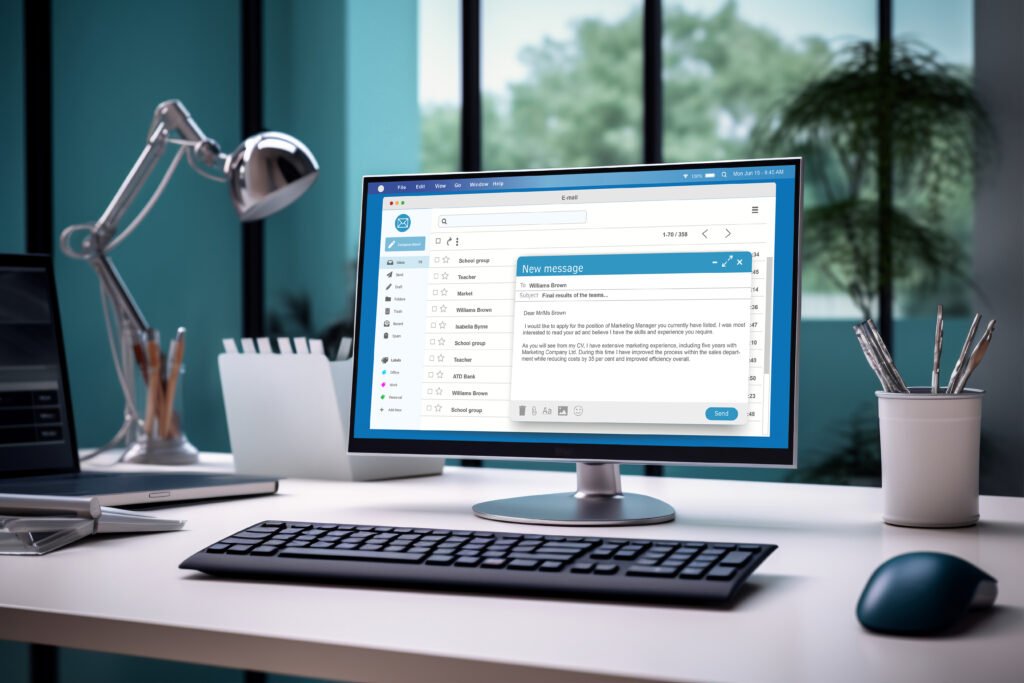
Before ending your email, make sure your request or next step is clearly stated. For example, “Please confirm receipt,” “Kindly review the attached document,” or “I look forward to your reply.” This helps the reader understand exactly what action is expected.
Finally, close your email properly. Common sign-offs include “Regards,” “Best regards,” “Sincerely,” or “Thank you.” After your closing, include a professional signature with your full name, title, company, and contact information. Always proofread your email before sending it to check for spelling errors, missing attachments, or unclear sentences.
Professional emails are not about using complex language. They are about being clear, direct, polite, and organized. When you apply these principles consistently, your communication will become more confident and effective in any professional environment.